
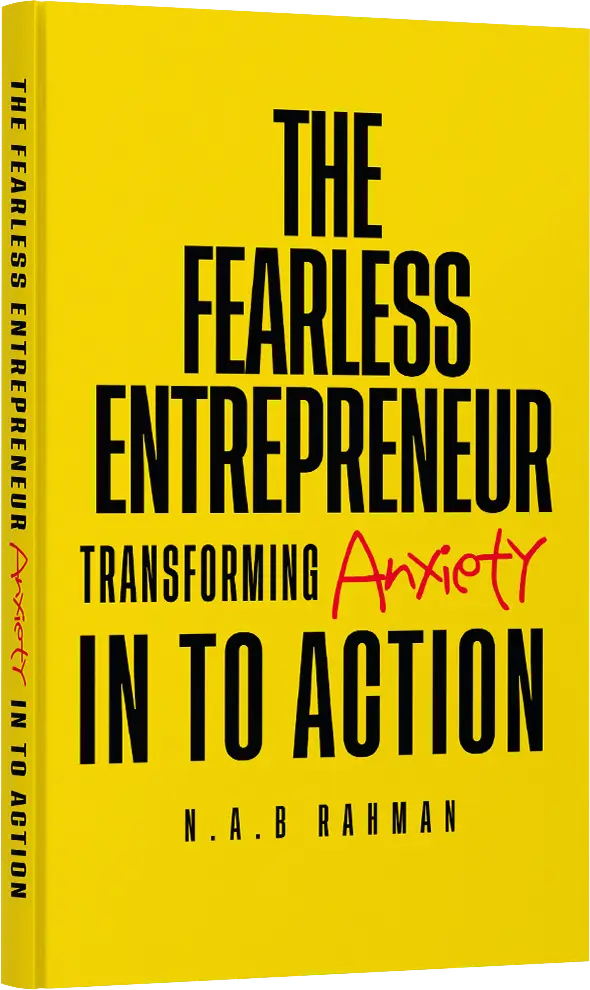
“The Fearless Entrepreneur: Transforming Anxiety into Action“ by Zaytoona Nur offers a personal look at the challenges entrepreneurs face, focusing on how anxiety shapes their approach. Rather than viewing anxiety as an obstacle, Nur shares how it can become a catalyst for bold action and meaningful achievements. Through her personal narrative and practical advice, she guides readers on transforming their fears into strengths that empower success in business.
“Taking care of yourself is also taking care of your company.”
Entrepreneurship brings excitement and also ranks among the most stressful activities a person can choose. Although we often romanticize the entrepreneur as tireless, motivated, and always focused, the reality is that entrepreneurship involves constant uncertainty, decision-making under pressure, loneliness, and significant personal and financial responsibility. All of these factors generate stress.
In her book, Nur explains entrepreneurial stress, how to identify it early, and shares 5 strategies to overcome it.
5 Practical Strategies to Cope with and Overcome Entrepreneurial Stress by Nur
But what is entrepreneurial stress?
Entrepreneurial stress is not simply “being busy” or “having a lot to do.” It is a physical and emotional response to a workload perceived as excessive, prolonged, or difficult to manage. This stress that affects us as entrepreneurs has various possible causes. It can be associated with internal factors, such as demanding more of ourselves than we can handle, fearing failure, or striving for perfection. But it can also be associated with external factors, such as financial problems, intense market pressure, or conflicts with partners, clients, or collaborators.
This type of stress manifests on two levels:
- Physical: It can cause fatigue, insomnia, muscle tension, headaches, or digestive problems.
- Emotional: We may experience anxiety, irritability, feelings of helplessness, or frequent mood swings.
We struggle to concentrate, become overwhelmed by obsessive thoughts, confront constant doubts, make impulsive decisions, or even freeze up.
Nur Highlights The Main Sources Of Stress For Entrepreneurs.
Nur lists some of the main causes of stress for entrepreneurs. You don’t necessarily experience them all at the same time, but you’ve almost certainly encountered them along your entrepreneurial journey:
- Financial uncertainty: variable income, difficulty predicting the future, dependence on key clients.
- Isolation in decision-making: feeling like you’re carrying the entire burden, a lack of partners with whom you can share your ideas.
- Self-criticism and perfectionism: maintaining very high standards, or feeling afraid of making mistakes or being judged by others.
- Work-life imbalance: working extended hours, not having enough mental downtime, and even feeling guilty for taking breaks.
- Social or family pressure: The expectations of success that we believe our loved ones have of us, comparisons with other entrepreneurs and businesses, and a lack of understanding from our environment.
Some common consequences that sustained stress can have on our business are:
- Hasty or erratic decisions: Under pressure, it’s easy to become impulsive or paralyzed. This can lead to costly mistakes, unnecessary course changes, or poor strategic investments.
- Loss of creativity and long-term vision: Stress limits the ability to imagine new solutions, innovate, or plan with foresight. We end up focusing only on surviving day to day, losing sight of the strategic direction of our project.
- Stagnation of business growth: When we are consumed by stress, we stop seeking new opportunities, lose the ability to adapt to the market, and become more reactive than proactive. This can hinder our company’s expansion, innovation, and natural evolution.
- Risk of burnout or emotional collapse: When we reach a state of extreme exhaustion—emotional, physical, and mental—we lose the ability to lead, make decisions, and maintain the necessary pace to keep the company running. This can lead to delays, disorganization, client loss, internal conflicts, and even the partial or total abandonment of the project. The business becomes vulnerable, especially if everything depends on a single person.
For all these reasons, learning to manage stress is neither a luxury nor an indulgence. It is a fundamental condition for the personal sustainability of the entrepreneur and for the project’s long-term viability.
5 Practical Strategies to Face and Overcome Entrepreneurial Stress
Accept that feeling stressed is not a failure. The first step Nur wants us to know is to stop fighting the fact that you’re stressed. Feeling stressed doesn’t make you weak or “less of an entrepreneur.” It’s a natural signal from your body and mind that you’re facing a workload that needs attention. Recognizing it is the first step to managing it intelligently.
What could you delegate, simplify, or postpone?
- Learn to set healthy boundaries.
One of the most common mistakes among entrepreneurs is not knowing how to say no: to demanding clients, to unevaluated new ideas, to working late. Boundaries don’t keep you from success; they bring you closer to a more sustainable way of achieving it. Set defined schedules for work, for rest, and for your family. Manage your time as the most valuable resource you have.
- Create self-care routines.
Your body is the vehicle of your business. If you neglect it, you pay the price in energy, clarity, and resilience. Include at least one activity in your daily or weekly schedule that recharges you:
- Walking outdoors
- Meditating for 10 minutes
- Listening to relaxing music
- Sleeping well
- Eating mindfully
Don’t wait for “free time” to do it. Self-care should be part of your business strategy.
- Seek support and conversation.
The loneliness of entrepreneurs is a key factor in increased stress. Don’t face everything in silence. Talk to other entrepreneurs, find a mentor, participate in networks or support groups, and share your concerns. Asking for help isn’t a sign of weakness, but of emotional intelligence.
- Challenge your limiting beliefs.
Much of an entrepreneur’s stress stems from ideas like:
- “If I don’t do it, it won’t be done right.”
- “I have to work harder than anyone else.”
- “Rest is a waste of time.”
If you’re already experiencing high levels of stress, with intense physical or emotional symptoms, it’s important to take a real break. Nur suggests:
Schedule a few days to disconnect, even if you don’t go far.
- Reorganize your priorities.
Sometimes a business needs a redesign, not more effort. Stress isn’t eliminated, it’s managed. Being an entrepreneur involves constant challenges, but you don’t have to live in a permanent state of tension. Recognizing your limits, cultivating self-care habits, and maintaining a flexible and resilient mindset are key to moving forward without sacrificing your well-being.
Remember: your business needs the best of you, not what’s left of you when you’re exhausted.
Your Emotional Health Isn’t An Extra. It’s Part Of The Business Plan.
Are you interested in learning more about strategies that can help you manage entrepreneurial stress? Dive into “The Fearless Entrepreneur: Transforming Anxiety into Action” by Zaytoona Nur, where she shares her insights and actionable advice based on her own experiences.